International Symposium
on ElectroAcoustic Technologies
International Symposium
on ElectroAcoustic Technologies
On September 12, the 11th International Symposium on ElectroAcoustic Technologies (ISEAT) officially opened in Shenzhen. Jointly hosted by Nanjing University Shenzhen Research Institute and the School of Physics, Nanjing University, the two-day symposium was themed “Immersive Sound: Technology + Art.” Nearly 600 experts, scholars, industry leaders, and senior engineers from universities, research institutions, and leading companies around the world gathered to explore innovations in acoustic technologies and industry development.
The symposium featured in-depth discussions on acoustic materials, automotive acoustics, intelligent acoustics, spatial audio, and immersive sound, with a diverse program including keynote speeches, technical presentations, special lectures, and technology demonstrations. With real-time AI translation supporting cross-language communication, the event delivered more than 2,300 minutes of professional content and technical exchange.
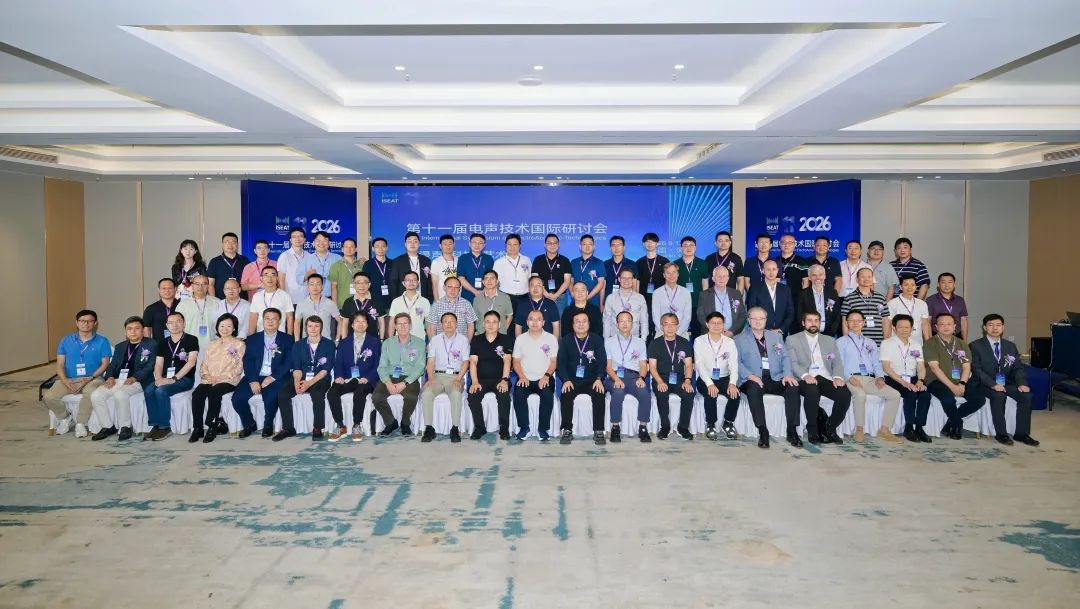
Group Photo of the Guests
At the opening ceremony,Jiang Bin, Director of the Shenzhen Institute for Innovation Strategy;Han Dong, Dean of Nanjing University Shenzhen Research Institute;Steve Temme, Chair of the AES Technical Committee on Automotive Audio;Yang Jun, Deputy Director of the Institute of Acoustics, Chinese Academy of Sciences;Yao Leihong, Deputy Secretary-General of the China Electronics Audio Industry Association;Huang Xingzhi, General Manager and CTO of the Electromagnetic Products Business Unit at AAC Technologies; and Wang Li, Chairwoman of Shenzhen Horn Audio Co., Ltd., among other distinguished guests, attended the event.Academician Shu-Yi Zhang of the Chinese Academy of Sciences,Xian-Gang Wan, Dean of the School of Physics at Nanjing University, and César Lamschtein, President-Elect of the Audio Engineering Society (AES), extended their congratulations through congratulatory messages and video addresses.
Academician Shu-Yi Zhang noted that the theme “Immersive Sound: Technology + Art”reflects the growing convergence of acoustic technology and artistic expression. She expressed her hope that participating experts and scholars would further strengthen academic and industry collaboration and advance the integration of technological innovation and artistic expression. She also encouraged young acoustics professionals to explore emerging interdisciplinary fields and pursue innovation. She further looked forward to ISEAT continuing to serve as an international platform for exchange, fostering industry–academia–research collaboration and contributing to the high-quality development of acoustics and electroacoustic technologies in China.
Dean Xian-Gang Wan noted thatNanjing University is currently the only C9 university in China offering integrated bachelor’s, master’s, and doctoral training in acoustics. Over the years, the university has cultivated and provided a large number of talented professionals for the acoustics industry while maintaining close collaboration with enterprises. He emphasized that theInternational Symposium on ElectroAcoustic Technologies (ISEAT) has become an important platform for academic and industry exchange in the field of electroacoustics in China. He expressed the hope that experts and scholars would make full use of the symposium to deepen collaboration and jointly advance continued innovation and progress across the industry.
César Lamschtein, President-Elect of the Audio Engineering Society (AES), said that he would present the technical report “We Should Be Ashamed: Phase Is Not Polarity.” He expressed his anticipation of engaging with experts, scholars, and industry professionals from around the world to explore emerging topics and developments in audio technology, and wished all participants an inspiring and meaningful international academic gathering.
Yong Shen, Professor at the Institute of Acoustics, Nanjing University, and Chair of the symposium, noted that the integration of technology and art also brings emotion into the experience, creating an immersive sense of presence and emotional connection. It can draw listeners into a state of deep concentration, evoking emotional resonance and a profound response.
He explained that creating such an immersive experience requires an integrated chain spanning the capture and transmission of sound, supported by hardware including loudspeakers, amplifiers, and chips, as well as standardized measurement, advanced research and development, and high-quality product manufacturing. These technologies must ultimately be applied across four scenarios: large, medium, small, and micro spaces.
Professor Shen also expressed his sincere gratitude to all supporting organizations and companies, as well as to every participant. He hoped that the 11th ISEAT would bring together diverse perspectives, connect technology with art, and jointly explore the many possibilities of sound.
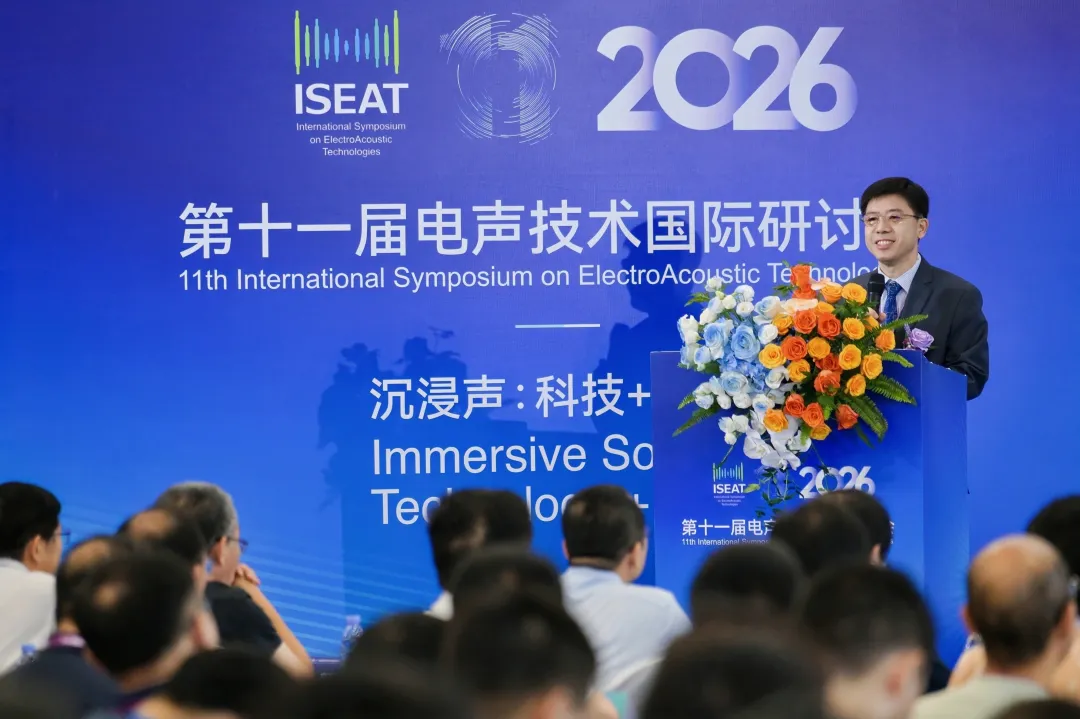
Yong Shen, Professor and Doctoral Supervisor of Nanjing University, Chairman of ISEAT
Representatives of the symposium’s supporting organizations and companies extended their warm congratulations on the successful opening of the 11th ISEAT. They noted that, after years of dedicated work in the electroacoustics industry, ISEAT has become an important platform connecting universities, research institutions, experts and scholars from China and around the world with companies across the industry value chain. The symposium continues to facilitate the sharing of cutting-edge technologies, the commercialization of research, and the adoption and application of new technologies, processes, and standards.
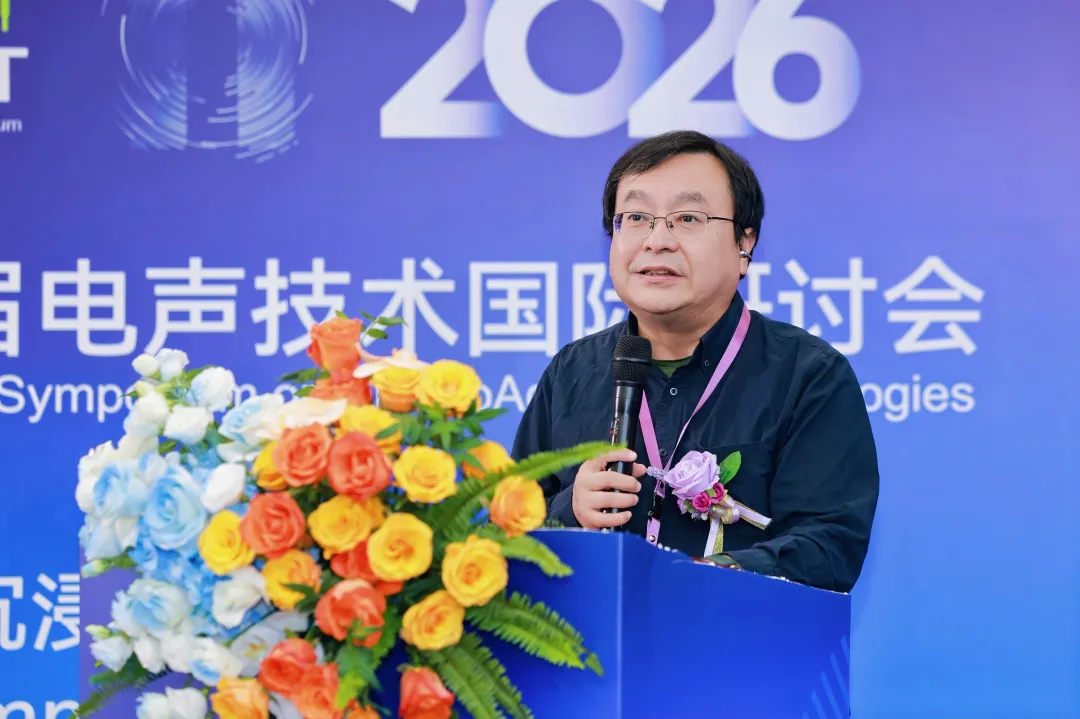
Jun Yang, Deputy Director, Institute of Acoustics, Chinese Academy of Sciences
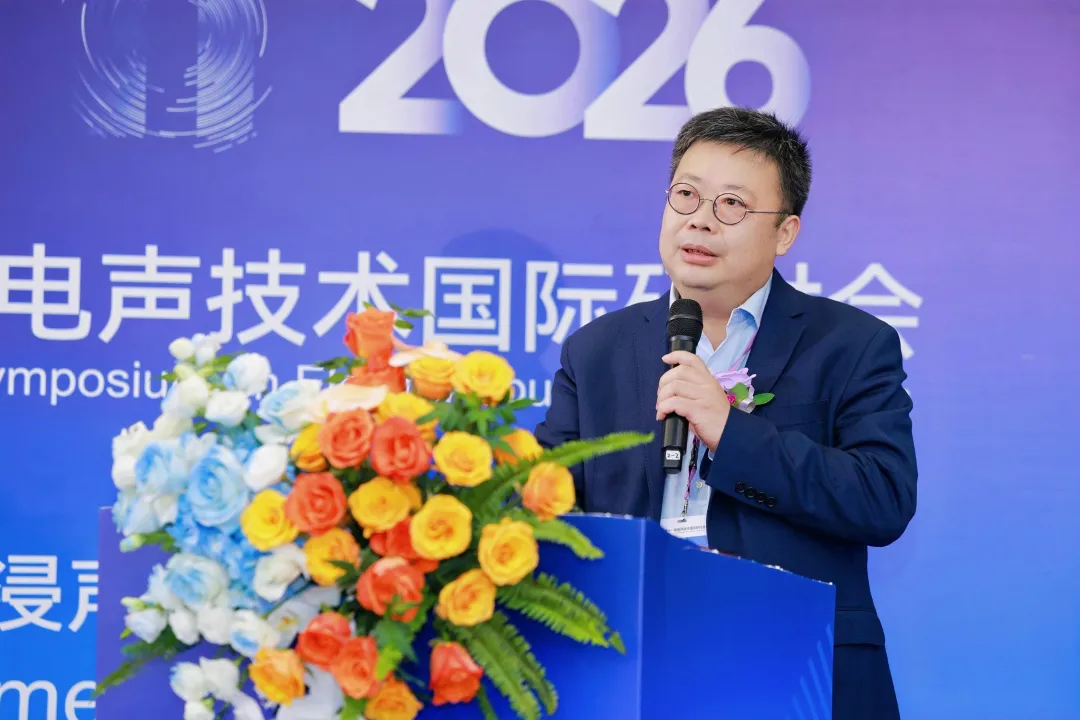
Huang Xingzhi, General Manager and CTO, Electromagnetic Products Business Unit, AAC Technologies
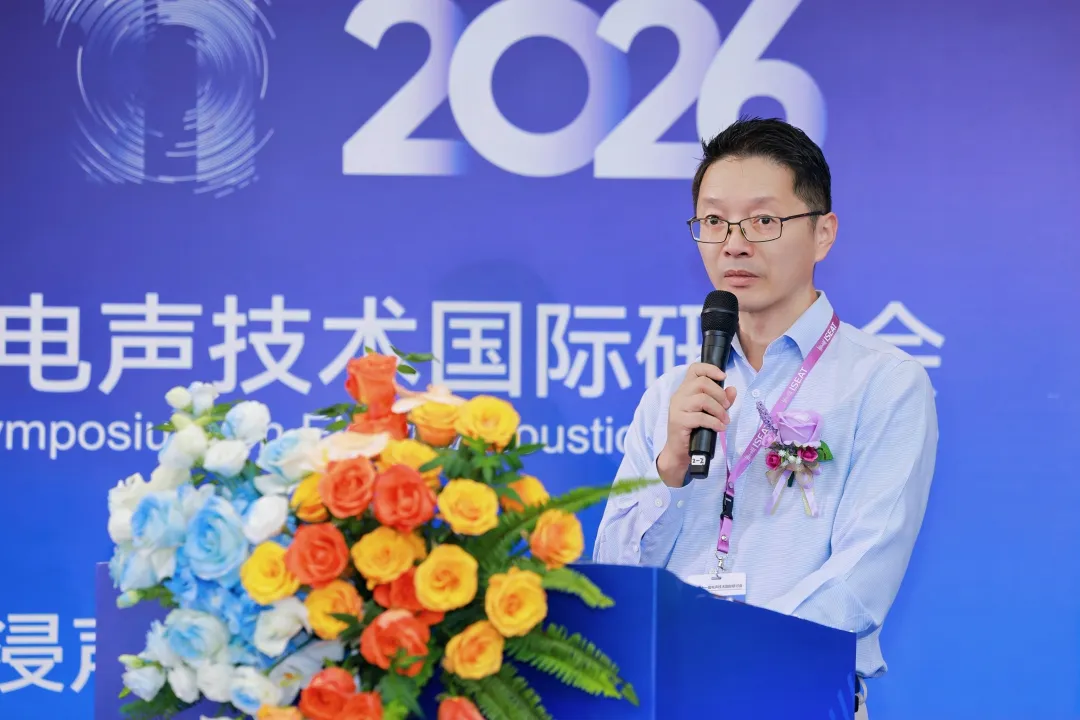
Yao Leihong, Deputy Secretary-General, China Electronics Audio Industry Association
At the symposium, Steve Temme, Chair of the AES Technical Committee on Automotive Audio and Founder and President of Listen, Inc., delivered a special presentation titled “Overcoming challenges of measuring distortion audibility in vehicles.” He noted that standardized measurement of automotive audio systems continues to face a number of challenges. His presentation covered topics including frequency-normalized distortion calculation methods, single-microphone approaches, and BSR measurements, offering new technical perspectives for assessing distortion audibility in complex acoustic environments.
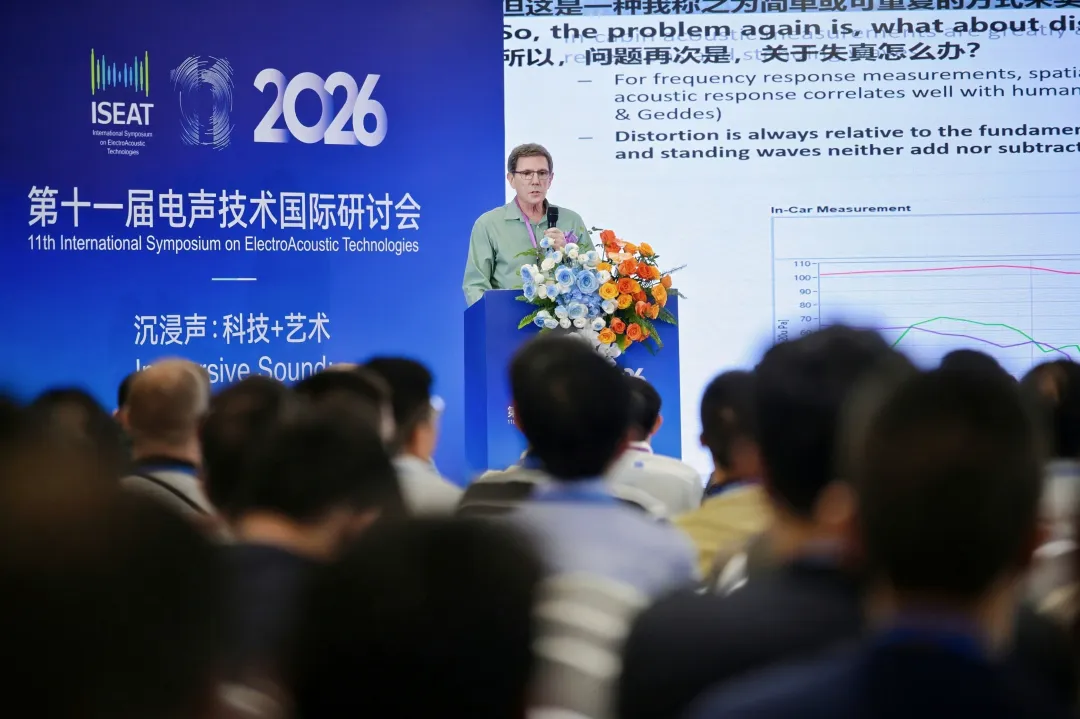
Steve Temme, Member of the AES’s Technical Committee on Automotive Audio, Founder &CEO of Listen,Inc.
At the symposium, leading companies including AAC Technologies, SAATI, Goertek, Luxshare Precision , GAIT, Landtop Technology, Rayking Electronics , Horn Audio, HBK, Dirac, Listen | S&V Samford, SSI New Material, SoundFilter , COMSOL, USound, KLIPPEL, ILE Technology , YKM Acoustic , Fangbo Technology, Goer Dynamics, DKM, and Soundflow Technology showcased their latest products and solutions. The exhibits covered a wide range of applications, including acoustic modules, acoustic materials, precision components, smart accessories and complete systems, acoustic solutions for humanoid robots, automotive acoustic solutions, and testing, measurement, and analysis solutions.
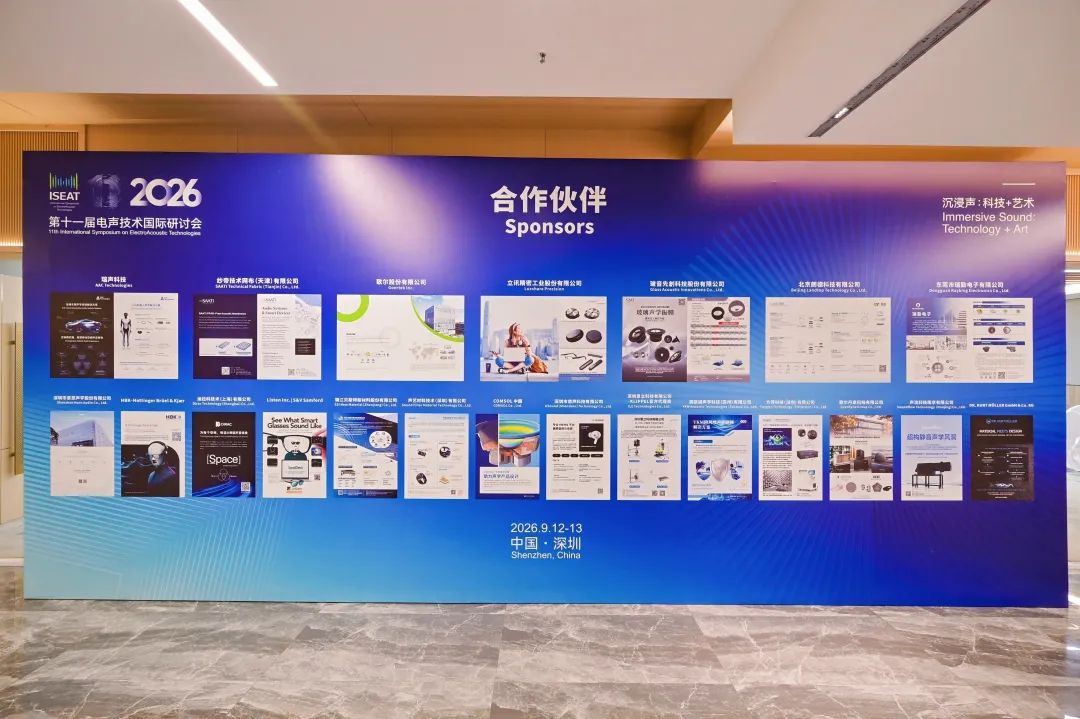
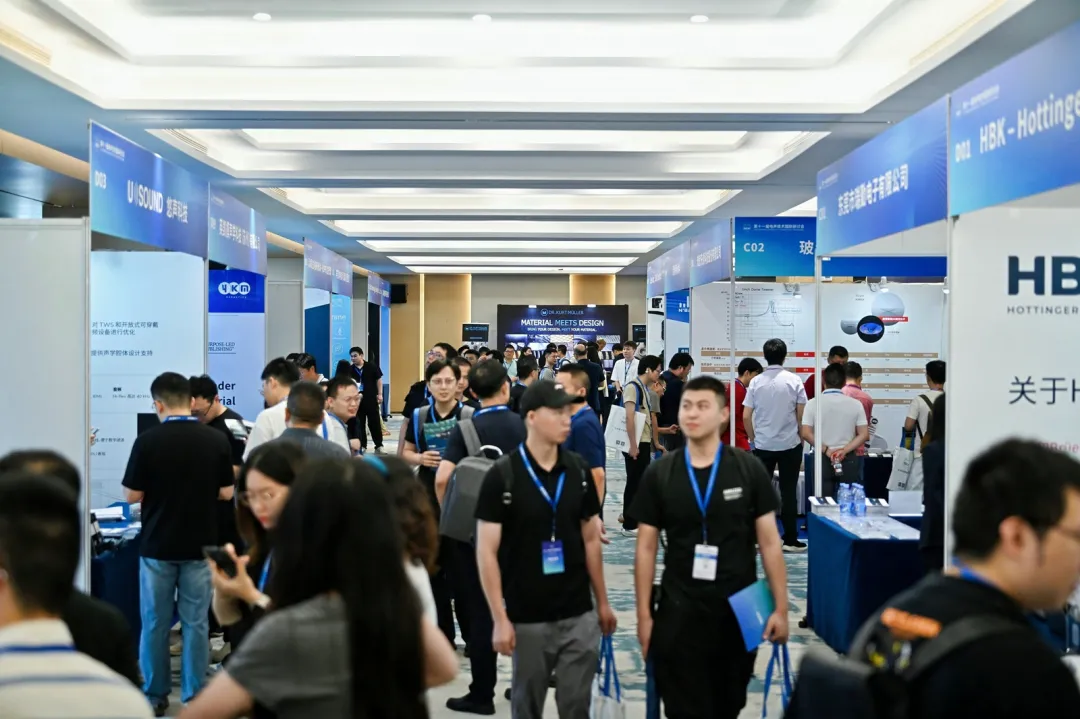
Scenes from the Conference
The symposium attracted nearly 100 companies from China and around the world, including Awinic, Anker, Alibaba, Devialet, Fenda, Guoguang Electric, Hikvision, HARMAN, Hisense, Huawei, Huaqin, Cosonic, Hangsheng, iFLYTEK, KONE, Lidea, Lenovo, Lianchuang Optoelectronics, Marshall, Microsoft, Motorola, NOVOSENSE, Nothing, NIO, Premium Sound Solutions (PSS), Chery, Siasun, TCL, Tencent, vivo, Xiaomi, Ezpro, Great Wall Motor, and ThunderSoft, among others.
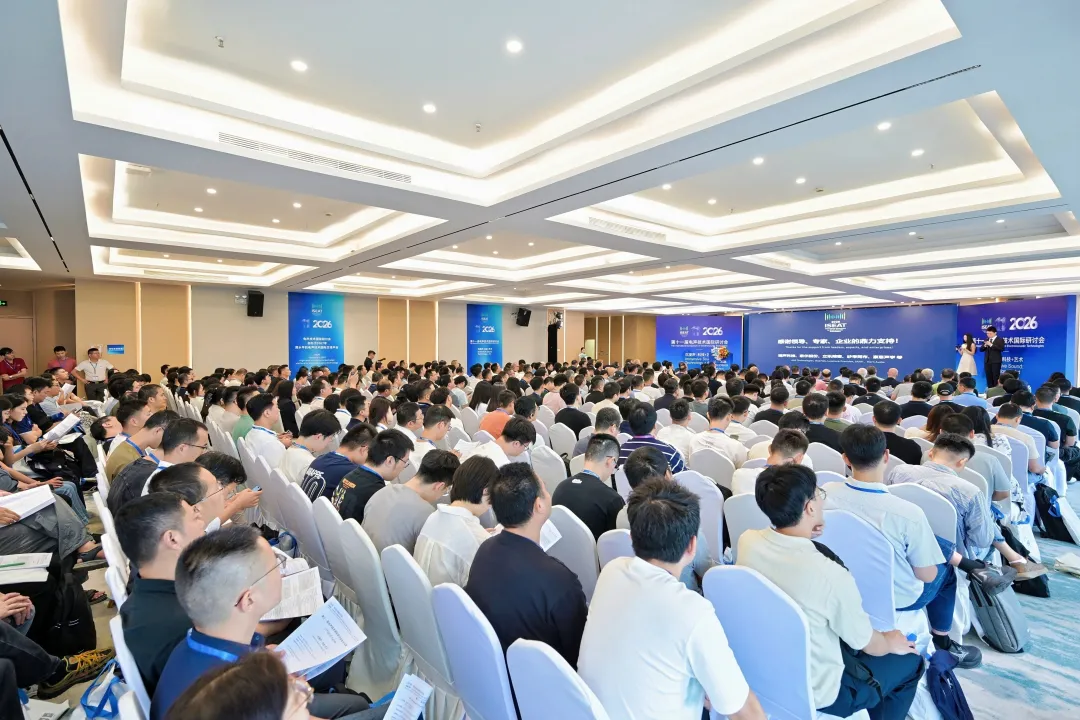
Scenes from the Conference
The two-day program featured a rich and diverse lineup, including standards sessions, a series of automotive audio lectures, Master Classes, professional tutorials, and technical presentations. With in-depth and practical discussions, the symposium fostered the exchange of ideas and technical expertise, driving continued innovation and development in the electroacoustics industry.

For more info.
please visit ISEAT official Wechat
Wechat:ISEATorg
Official website:www.iseat.org